
A City Committed to People & Planet
You’re studying in London — a global city that consistently ranks among the world’s most sustainable.
Led by Sadiq Khan, London’s climate strategy includes ambitious targets for net zero, cleaner air and a stronger green economy. The city is investing in renewable energy, low-emission transport and circular economy initiatives — all designed to protect both people and planet.
So you’re not just visiting a historic city. You’re living in one actively shaping a greener future. Studying abroad shapes your future. But it also shapes the world around you. Every programme, every flight, every classroom, every decision has an impact on people and the planet.
At AES Experiential Learning and Living, we believe international education should create opportunity without compromising responsibility. That’s why People & Planet sits at the centre of our strategy, not at the edges.
Now let’s talk about your role in that.
Your Role: Practical Ways to Support People & Planet
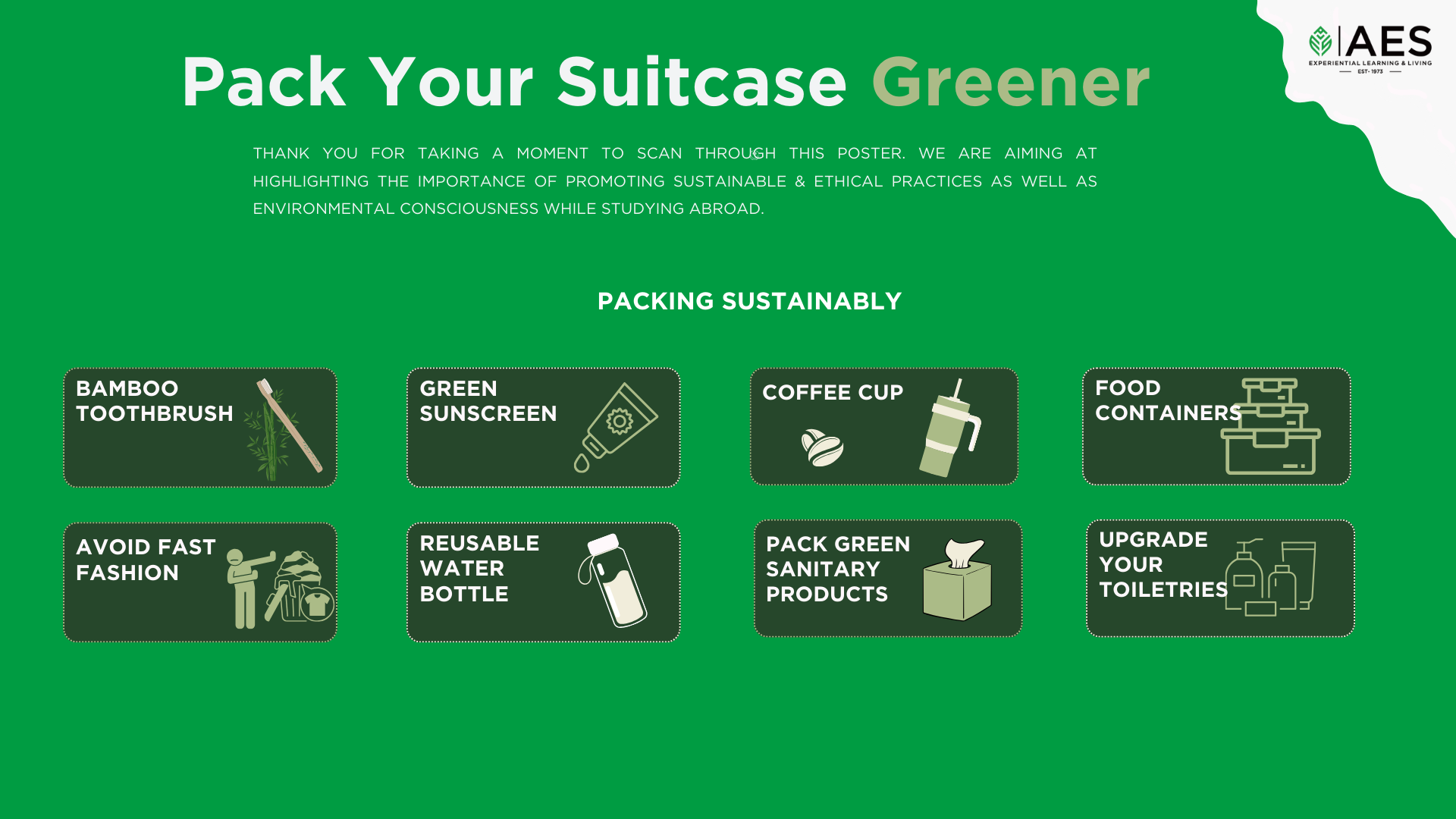
Pack with Purpose
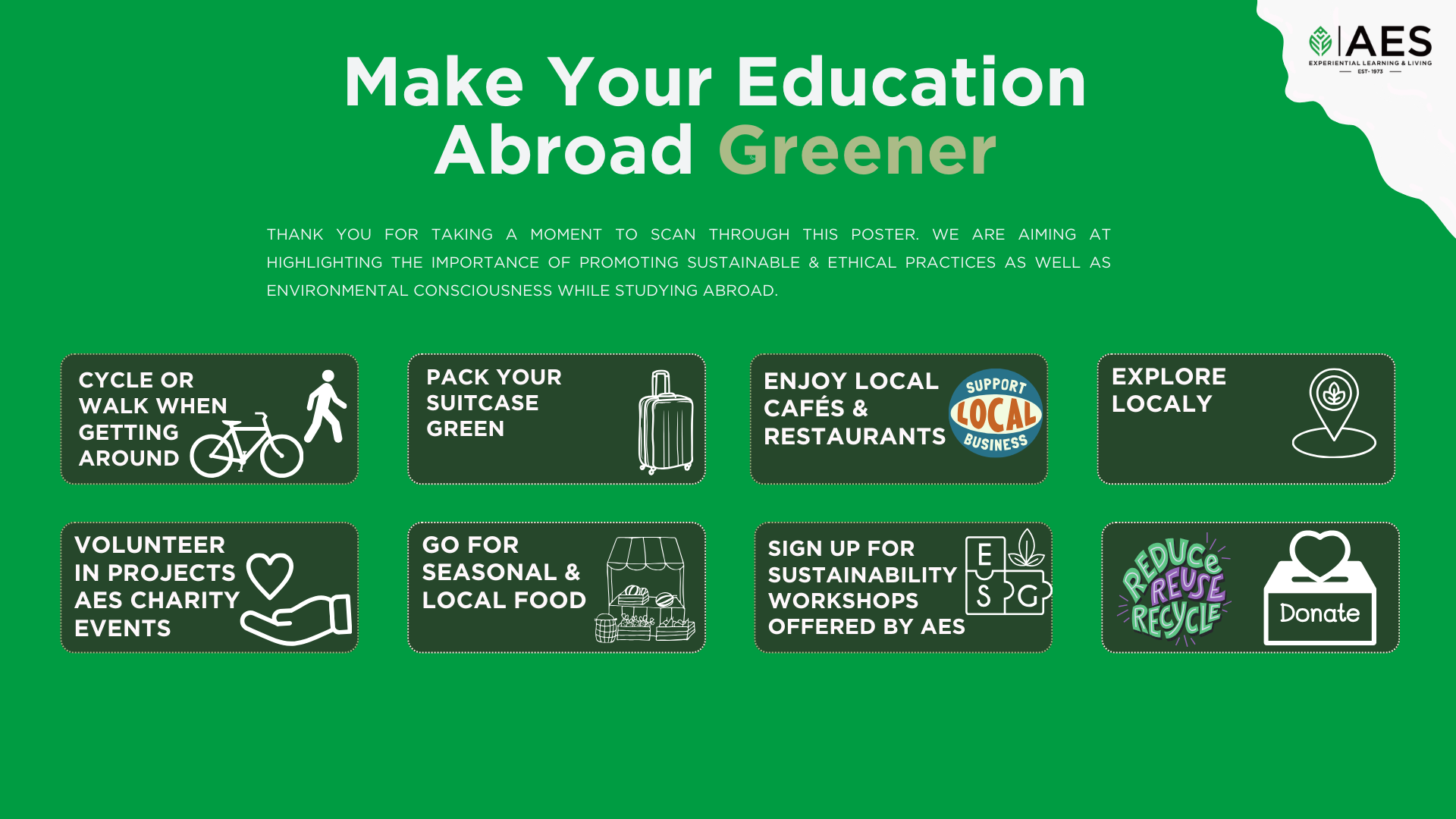
Choose reusable, refillable and plastic-free essentials. Pack lighter where possible — transport emissions matter. Conscious packing is your first People & Planet decision.
Travel Smarter
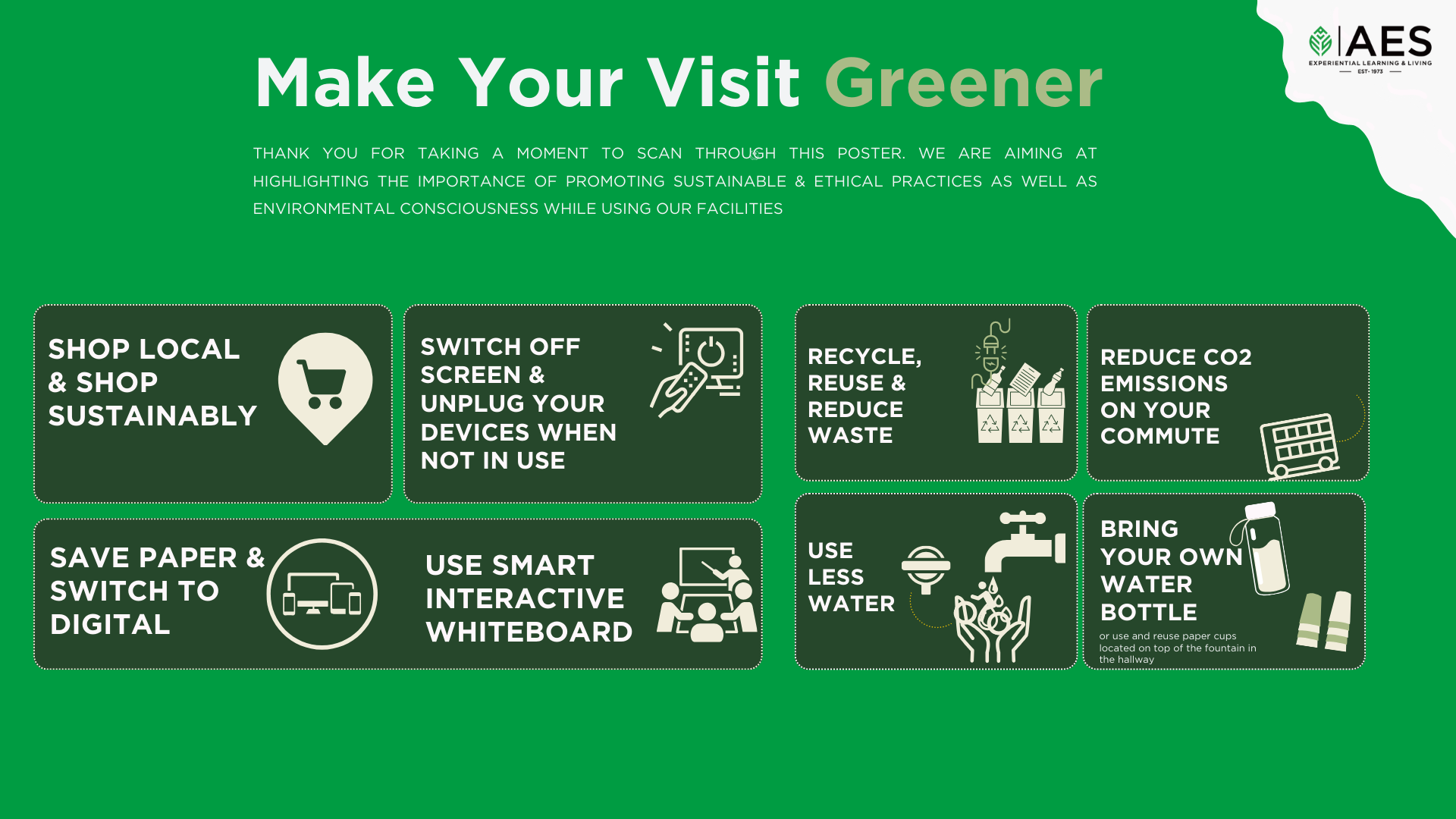
Walk. Cycle. Use public transport. London’s expanding low-emission buses and cycle lanes make greener travel easy. It’s better for air quality, better for local communities and honestly a better way to experience the city Eco-friendly ways to get around London – Experience London blog
Don’t Buy New by Default
Charity shops across London are goldmines. Buying second-hand supports local causes (people) and reduces demand for new production (planet). It’s sustainability that also protects your budget London’s Best Charity Shops | 16 London Shops For Pre-Loved Bargains
Rethink Short Flights
Air travel is one of the biggest individual carbon impacts. When travelling within the UK or Europe, trains and coaches are often lower-carbon alternatives. Slower travel often leads to deeper experiences too Passengers to enjoy cleaner travel between UK and Europe – GOV.UK
Don’t forget to explore your city and immerse yourself in the local culture is an excellent way to make the most of your study abroad experience Sustainable London: a city of the future
Eat for People & Planet
Choose seasonal, locally sourced food where you can. It cuts food miles and supports local producers. London has a growing number of plant-forward and sustainable restaurants, making climate-conscious choices easier than ever The 22 Best Sustainable and Zero-Waste Restaurants in London
Bring a reusable bag. Avoid single-use plastics. It sounds basic — it’s not insignificant.
Refill, Don’t Replace
London’s tap water is safe and high quality. There are thousands of refill stations across the capital. Carry your AES bottle and use it. Single-use plastic is one of the easiest impacts to reduce.
Share More, Waste Less
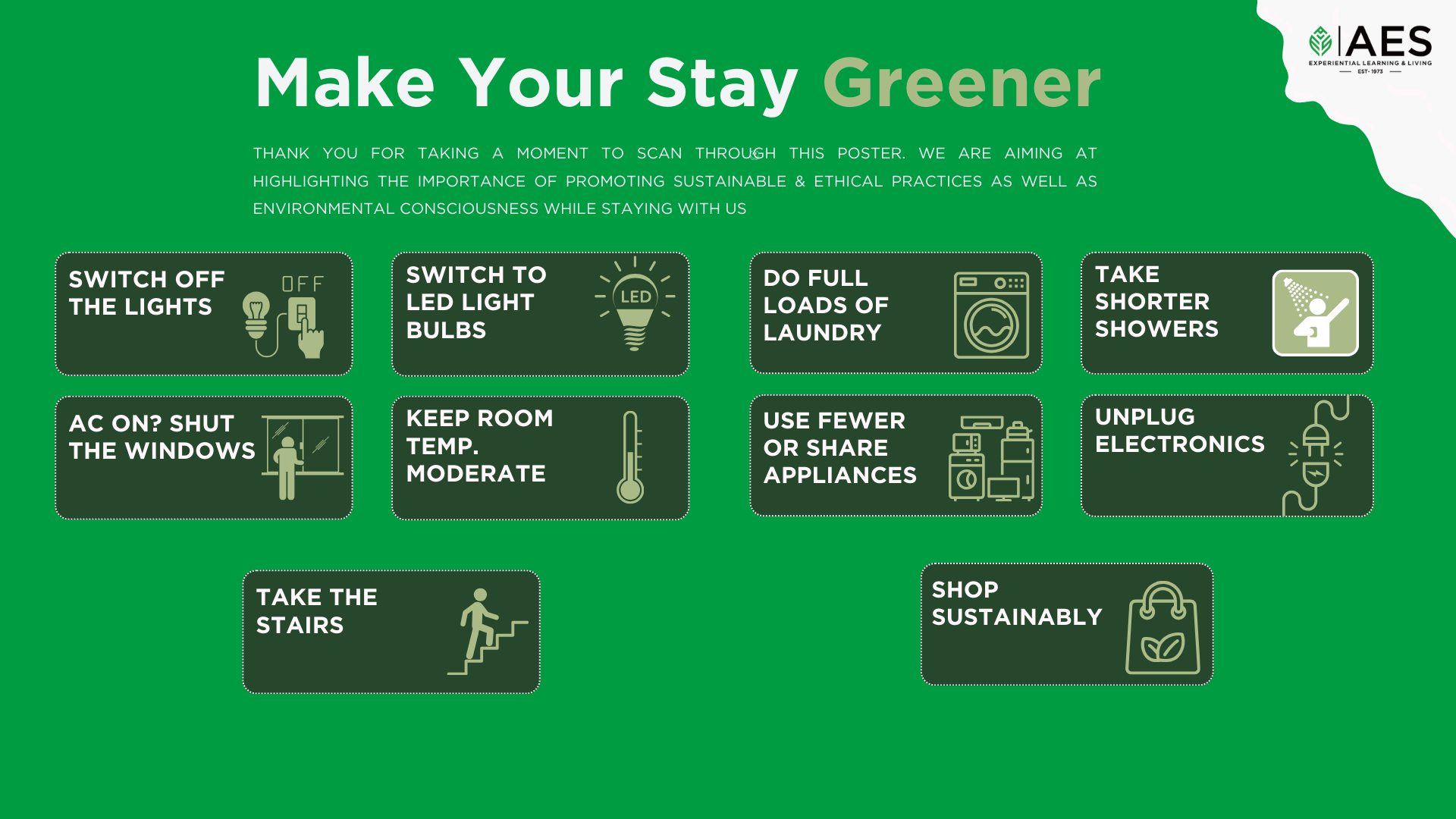
Shared living naturally reduces consumption. Share appliances, cook together, avoid overbuying cleaning products. Community living supports people and reduces pressure on the planet.
Bring People & Planet Into Your Learning
AES offers free sustainability workshops and regularly shares ESG events and opportunities. Engage with them. Ask how your academic discipline connects to climate, equity or sustainable development. Sustainability isn’t just environmental — it’s social too.
Volunteer
Supporting local initiatives strengthens communities and deepens your connection to the city. Follow the AES social calendar for charity events and volunteer opportunities. Impact feels different when you’re part of it.
Circular Economy & The 5 Rs in Action
At AES, we go beyond the traditional 3 Rs. Our People & Planet approach follows the 5 Rs:
Refuse. Reduce. Reuse. Repurpose. Recycle.
- Refuse what you don’t need — especially single-use plastics and unnecessary packaging.
- Reduce consumption where possible — buy intentionally, not impulsively.
- Reuse items throughout your stay instead of replacing them.
- Repurpose belongings creatively or pass them on through the AES Donation Hub.
- Recycle correctly using local guidance and facilities.
Our AES Donation Hub supports this circular economy mindset. At the end of each term, instead of discarding clothing, kitchenware, books and essentials, students can donate them. Items are then:
- Shared with incoming students
- Donated to local charities
- Reintegrated into community initiatives
This reduces landfill waste, lowers demand for new production and supports people in the local community.
Circular thinking protects the planet — and strengthens communities at the same time.
Make Your Accommodation Greener
Switch off appliances. Be mindful with heating and water use. Energy consumption is one of the largest controllable impacts during your stay.
Marginal gains matter — especially when hundreds of students make them together.
The Bigger Picture
People & Planet isn’t a trend. It’s a responsibility.
Studying abroad already shapes who you become. Choosing to consider your impact shapes what kind of global citizen you’ll be. Every choice — how you travel, what you buy, where you spend — connects you to a bigger system.
You don’t need to be perfect. You need to be intentional.
That’s how real change happens.
Our Sustainability Journey So Far – Year 3
At AES, sustainability is not treated as a side project — it is part of the student experience, partnership development and the way we operate as an education provider.
We’re proud to have once again achieved internationally recognised Planet Mark Certification, reflecting our continued commitment to measurable environmental action, transparent reporting and positive social impact.
For our students and university partners, this means working with an organisation that is actively embedding sustainability, ESG awareness and responsible business practices into both operations and education.
What We Achieved in 2025
Reducing Our Environmental Impact
This year, AES achieved:
- 21.1% reduction in Scope 1 & 2 emissions
- 23.6% reduction per employee
- 75% renewable electricity usage across operations
- Expanded carbon reporting across 14 UK sites
These figures are independently verified through Planet Mark, helping ensure transparency and accountability in our reporting.
Smarter Travel & Lower Emissions
We continue to reduce unnecessary travel and operational emissions through:
- Hybrid and virtual internship opportunities
- Digital collaboration and blended programme delivery
- Green travel initiatives and lower-emission operational practices
For students, this creates more accessible and flexible opportunities.
For university partners, it supports lower-carbon programme delivery and more sustainable international education models.
Sustainability in Learning & Student Experience
Sustainability is increasingly integrated into the student journey — not only operationally, but academically and professionally.
ESG & Sustainability Learning Opportunities
AES delivered and supported workshops and learning activities in areas including:
- ESG in International Finance
- Sustainability in Construction
- Sustainability in Media & Journalism
Students also engaged with sustainability themes through:
- Workshops and industry discussions
- Internship and placement experiences
- Business and employability activities
- Collaborative projects linked to global sustainability challenges
Our programmes contribute to multiple UN Sustainable Development Goals (SDGs), helping students better understand how sustainability connects to business, society and future careers.
Supporting Responsible Operations
Across our study centres and operations, AES continues to focus on:
- Sustainable procurement practices
- Reducing waste and single-use plastics
- Smarter energy and resource use
- Improving operational efficiency
- Encouraging responsible workplace practices
These changes help create learning environments that better reflect the expectations of modern students, universities and employers.
Social Impact & Community Engagement
Sustainability also means creating positive impact for people and communities.
Our social impact reporting is independently verified through the Social Value Portal framework and includes initiatives related to:
- Community partnerships and NGO collaboration
- Student engagement and mentoring
- Staff wellbeing and development
- Volunteering and charitable support
- Environmental and reforestation initiatives
We continue to work with organisations including Just One Tree, Eden Project and other sustainability-focused partners to strengthen our long-term environmental and social impact.
Looking Ahead: 2026–2028
Our next phase focuses on continuing measurable progress while expanding opportunities for students and university collaborators.
Key Priorities
- Continue reducing Scope 1, 2 and 3 emissions annually
- Progress towards 100% renewable energy usage
- Expand ESG and sustainability learning opportunities
- Increase sustainability-focused workshops and events
- Grow virtual and hybrid internship opportunities
- Strengthen student and stakeholder engagement
- Deepen partnerships with universities, NGOs and industry
- Increase contribution across additional UN Sustainable Development Goals
Independently Verified Reporting
AES sustainability and social impact data is independently verified through:
- Planet Mark
- Social Value Portal / National TOMs Framework
This helps ensure our environmental and social impact reporting remains measurable, transparent and externally assessed.
Find out more about our Journey: ESG Policies | AES

Our ESG Policy